
Made in His Image (Genesis 1:26-28)
Here’s my sermon from Sunday, March 15th. The manuscript is below. You can hear the audio here.
Your doctor looks at your chart. He scans through your labs. And he just shakes his head. “So you’re not feeling well. The scale just won’t go down. Looking at this food log - from that weekend trip to New York. You “shared” four slices of pizza. Topped it off with a cinnamon roll. And washed it down with a Thai brown sugar boba tree. And that was lunch? You’re telling me you ate one of those 500 calorie, scone-sized cookies every day - as a snack? Good for you: 88,000 steps over those four days. But no amount of walking is going to over come that. You ever tried to math, bro?”
We can look around in our country today, and wonder, “Why does everything seem to be on fire? Why’s the church so unhealthy? Why are people so dang mean?” Maybe it all comes down to diet and exercise. We’ve not fed people solid theology. We’ve not discipled people in the ways of Jesus. Maybe we’ve just served milk. And junk food for snacks. We’ve been so desperate to try to get “customers” to stay, that we’ve just given them what they’ve wanted. Cheap food filled with ingredients we’d rather not know, stuffed with preservatives, loaded with dyes, chock full of high-fructose corn syrup. We’ve not exercised minds. Or gotten hearts pumping. And we wonder why the situation’s so bad.
Everything comes back to our theology - what we understand about God and this world He’s made. And also our discipleship - how we follow after Jesus. And there’s maybe nothing that’s more critical - and has been more neglected - than the foundational idea that we’ll talk about today. We have been made in the image of God. We are the imago Dei.
Genesis One and God’s Image
Recently we started this series through Genesis. Aaron did an overview of chapter one. I did the same for chapter two. And then we’ve spent time zooming in, focusing on smaller passages, hitting on specific topics. You may remember, how back in chapter 1, the Lord makes the animals, the “beasts,” it says, in verse 25. And God looks at what He has made, and He calls it “good.”
But then there is a sudden shift in tone. Instead of making declarations - “let there be” - or “let the earth bring forth” - it shifts. It becomes more personal. And almost sounds like a conversation. “Let us make man,” it reads. More on that “us” term in a bit. But it also moves from saying God creates things “according to their kinds” - to this big phrase that will be our focus today. He makes man and woman here “in His own image” (verse 27). The passage reaches a climax, a crescendo. Something special’s going on. There are so many more words here - describing day six. And chapter 2 digs down further into these truths. But now, and only now, God looks at all He’s made. And what does He say? Verse 31: “Behold, it was very good.” This is clearly the pinnacle of His creation. Human beings, made in His image. Created after His likeness.
Now those words have been hotly debated. What could it mean to say that we image God? Some have emphasized our spiritual and mental qualities. There, in some way, we look and act like God. Others have emphasized our capacity for relationship. We can have community with Him - and community with others. Still others have argued that it refers more to our calling. We’ve been made to work and care for God’s creation. Now each of those arguments has a measure of truth. However, back in seminary, I had the great privilege of studying under Dr. Peter Gentry, a well-known Old Testament scholar. And he boils it all down in a much simpler way. By looking at the meaning of those terms back in the days of Moses - who wrote this book.
He argues that those words - “image” and “likeness” - reflect two different aspects of our calling as humans - one vertical and one horizontal. “Likeness” speaks of our relationship with God and “image” talks about our relationship to creation.
What This Says About the Image of God
Let’s first take “likeness.” That word, back in the Ancient Near East, and reflected here in Genesis, refers to the special relationship between father and son. This is a family term. We can see that clearly in Genesis chapter 5.
Genesis 5:1 This is the book of the generations of Adam. When God created man, he made him in the likeness of God.
Genesis 5:2 Male and female he created them, and he blessed them and named them Man when they were created.
Genesis 5:3 When Adam had lived 130 years, he fathered a son in his own likeness, after his image, and named him Seth.
Did you catch that? Seth’s made in the “likeness” of Adam, his dad. Adam is made in the “likeness” of God. Adam is here called a son. Not literally, of course. But the point is clearly made. Humans are made to relate to God as sons. “Likeness” emphasizes sonship. But here this is given to both men and women. Both are given this nobility. Sons.
Let’s second consider “image.” That term was commonly used in a couple of ways. It first was a term applied to kings. Their god would lead in that land through that ruler. Kings were living images of their god. This was a royal term. And that view comes through in in Psalm chapter 8. Listen to verses 3 through 6. Scholars have long called this passage a commentary on Genesis chapter one.
Psalms 8:3 When I look at your heavens, the work of your fingers,
the moon and the stars, which you have set in place,
Psalms 8:4 what is man that you are mindful of him,
and the son of man that you care for him?
Psalms 8:5 Yet you have made him a little lower than the heavenly beings
and crowned him with glory and honor.
Psalms 8:6 You have given him dominion over the works of your hands;
you have put all things under his feet…
Verse 6 and what follows sounds like our passage today. “Image” emphasizes kingship. It’s what Adam was made for. To rule over that garden under God. And it wasn’t just the powerful - earthly rulers - who were made to image God - but every one of those He’s created. Called royalty.
In his great book Onward, Russell Moore reminds us of two wiles of our enemy. He either wants us to exalt ourselves - to try to be gods. Or he wants us to see ourselves as one of the beasts. Sadly, we lean into both of those angles in our world today. We’re made lower than the angels - and certainly than our God. But we’re exalted above the animals. Given responsibility over our Father’s creation. Kings.
And that brings us to the third thing we need to see - our purpose we see in verses 26-28. As as result of being made in God’s likeness and being created in His image, human beings are called to have dominion over the earth and everything that God had made. Adam and Eve were given this cultural mandate - to take what God had gifted in this garden - and tend it and grow it. To steward it and expand it. This is the job description given to us as humans. God “blessed them,” verse 28 says - with that vocation.
And that leads to a second way that term “image” was used. Kings would set up statues of themselves in far away lands. To stake their territory. To remind of their rule. To extend their influence. Humans beings were given the purpose to do that for the Lord. To display His reign. To spread His kingdom. But they were never meant to do it alone.
That leads to a fourth thing we must see about these verses. Community. We see the two sexes here. Verse 27: “So God created man in his own image, in the image of God he created him; male and female he created them.” This reminds us again that our bodies really matter. We’re not just spiritual beings. And our gender matters every bit as much. Man and woman are both made in God’s image. Together, men and women image our God. There’s a need for each other.
Now back to the use of those plural pronouns. God says, in verse 26, “Let us make man in our image, after our likeness.” Now there’s not enough here to prove the doctrine of the Trinity. God - one in essence - and three in person. Father, Son, and Spirit. But it sure fits with what opens up in the rest of our Scriptures. There is a hint here of plurality that in unity creates humans. And then we see a plurality in humans made for that unity. Maybe in male and female - living and loving and laboring together - we especially display the Triune God dwelling in community from eternity past.
In D.A. Carson’s book The God Who Is There, he talks about our tendency toward nihilism today - the “view that life has no intrinsic or objective meaning.” That’s where we go if we’re just a random mess of molecules. But if we are created by God - along with the heavens and earth - we have purpose. In His “likeness,” in His “image.” Given a calling. Together in community. Our existence isn’t for nothing. But for something glorious.
Now, this of course, has been impacted by sin. By the fall that we’ll see in Genesis chapter 3. Yes, that image has been marred. But it hasn’t been destroyed. And for that reason, we are complicated creatures - capable of goodness and beauty, but also of so much wickedness.
What This Means for His Image-Bearers
Let’s look at what this all means. In how we live, how we love, and how we labor. First, how we live. That is, how we carry ourselves. We reflect and represent. As sons of God, we live to reflect our Father. We should look like Him. We are made in his “likeness.” Just as children resemble their parents, we should reflect our Dad. In what we think about. In the choices we make. Our values. Our words. Our passions. Our actions. We’re His children.
As kings of God, we live to represent our Lord. We’re emissaries of His kingdom. We are made in His “image.” We display the ways of this new nation He’s building. We don’t just reveal His character. We showcase His ways. As Ray Ortlund explains, our identity - who we really are - is found in the King we represent. He writes, “You are His royal ambassador to our broken world.” We are meant to put God on display. Here’s how things look, how they work, in the kingdom of God.
Here’s the tragedy that is America today. So many so-called Christians don’t act too Christian at all. We can be the worst on social media. The last people anyone wants in the room. And non-Christians - made in His image - can put us to shame. As we gather around the water cooler. As we wait for pick-up games at the gym. As we lead and attend PTA meetings. We’re meant to be windows into a whole other world. As N.T. Wright has put it, we’re to be like angled mirrors, reflecting God to the world, and the world back to our God.
There’s an allure today - toward what feels like tradition. Going back to Catholicism or forms of Eastern Orthodoxy. And it often has to do with the imagery, the iconography. Utilizing depictions of God to facilitate worship. But there’s a reason why that’s part of the Ten Commandments, in Exodus 20, verse 4. We’re to make no “image” or any “likeness” of God. Why would that be? Well, it first diminishes His glory. But here’s a second big reason. That’s what we’re meant to be. We are His icons. His living statues in the world. As Preston Sprinkle puts it, “We are God’s idols - visible representations of God on earth.” Think about this: what if our lives - as icons - served to facilitate worship in the lives of those around us?
So how are we doing, reflecting our Dad? And how well are we living as representatives of Him? That’s how we’re to live, how we carry ourselves. We reflect. We represent. Our Father. Our King. This is our identity.
Let’s turn second to how we love. That is, how we care for others. We respect and we remind. We respect all made in His image and likeness. All people have dignity and worth. Infinite, inestimable value. Life is sacred. And meant to be honored. And John Perkins - who we lost this week - reminds us of something important - we don’t give people dignity. We affirm it. We respect others as we see our Father in them.
This is why God hates murder so much. Genesis 9:6. We kill someone made in His image. And this is also why we can never curse of mock or abuse any human being. Says James 3:9, speaking of the tongue, “With it we bless our Lord and Father, and with it, we curse people who are made in the likeness of God.” They’re children. They’re kings. Or our Creator and Lord. As Jemar Tisby writes, “God’s fingerprints rest upon every single person without distinction.” Nobility made in His likeness.
In their book Worthy: Celebrating the Value of Women, my friend Eric Schumacher and Elyse Fitzpatrick talk about the PBS show Antique Roadshow, where people dig through piles of what looks like trash. But they come upon a rolled up canvas. And the appraiser calls it priceless. What makes the difference? The artist’s signature on the painting. They write, “Value is intrinsically tied to the reputation of the one who created the piece.” Do we see His handiwork? Recognize His signature?
We also remind people of their calling from the King. You were made for so much more - we tell everyone we meet. The homeless man looking to score. The slumlord taking advantage of the poor. The woman who’s being trafficked. As well, as the man doing the trafficking. “You were made to be a King. You’re a queen, please believe me. You’re selling yourself short. You should trade up, friend.”
We see the potential - in every human being - and not just where we find them, with their problems. As Chris Watkin explains - this image of God - it’s not “contingent upon the individual’s performance or possession of certain desirable qualities.” We see what people could be. Not just where they are. We cast a vision for their lives. We point them to bigger dreams. This isn’t just for the beautiful or profitable or successful or strong. People running after that. Or people who think they’re there. We were created to be ambassadors of the king of the world. Royalty. In His image.
A couple of weeks ago, you might have seen some fuss about a tweet from John Piper. He posted a simple Bible verse with one short, sweet comment.
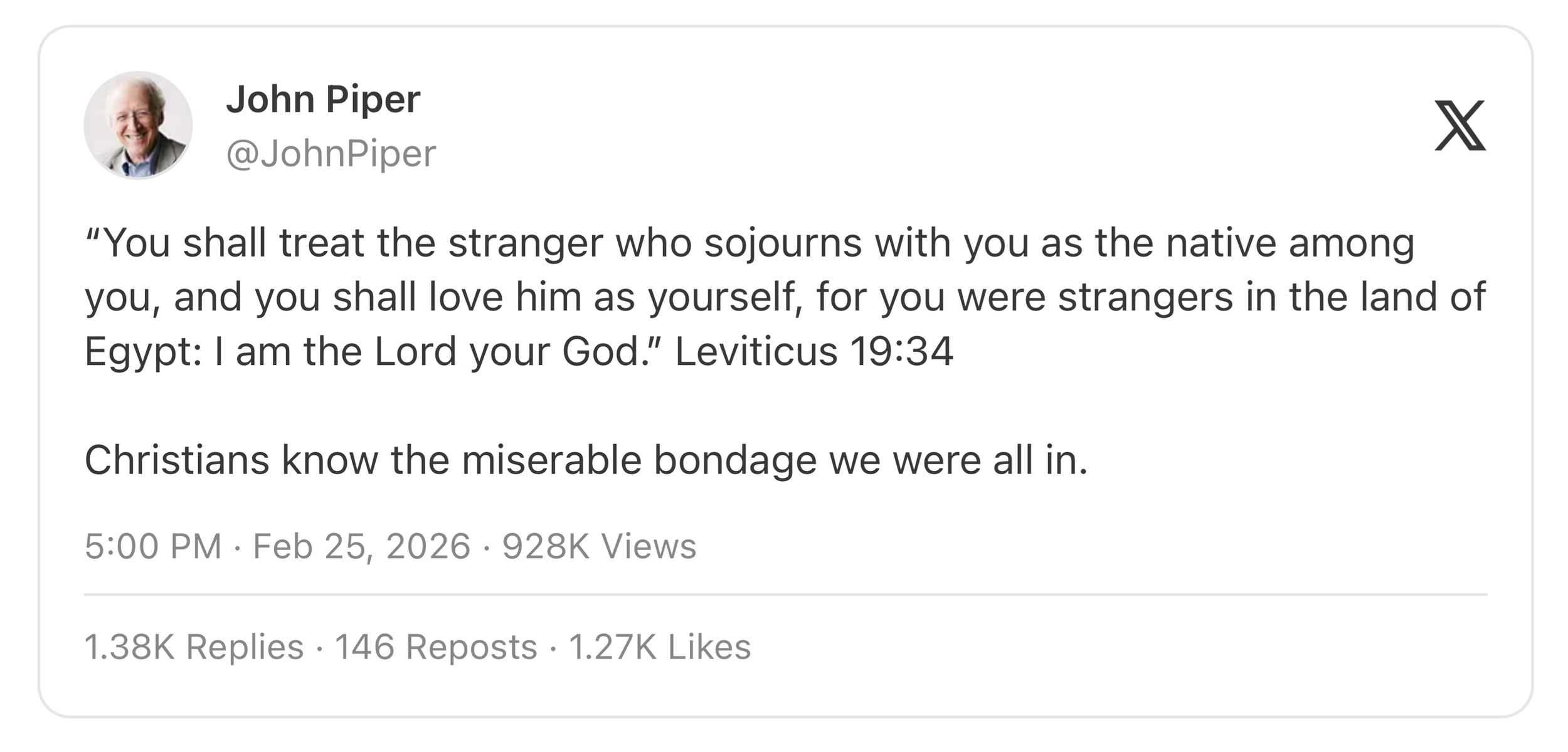
X went absolutely wild. Calling him woke - a communist - and all manner of terrible things. People with Christian in their bio. All because he quoted the Bible! And dared to point people to the dignity of immigrants. And remind us how we all have received God’s compassion.
Recently a man dressed up, as an old woman in a wheelchair, so he could surreptitiously scoot up, next to the Mona Lisa in Paris. And he pulled out a cake and attempted to smear it all over the painting. He didn’t count on bulletproof glass. And he got taken down fast. But he tried to deface that masterpiece. And that’s so often what we end up doing. Through our words and actions. Our nasty tweets and dirty looks. We dishonor what God has made. And what God values. Those made in His image. In His likeness.
One of my favorite books I read last year is by Aaron Armstrong. It’s a fabulous introductory theology - out on our resource table. He writes:
“To be a human being is to be God's image bearer. Regardless of our mental, physical, and relational capacity, regardless of our realized or innate potential, that is who and what we are. And with everything we are, from our biology to our actions, we are always reflecting something about what God is like. And when we begin to grasp that, it changes everything.
If all people are God's image bearers, we need to be compassionate, especially toward those with whom we might disagree (even those who might perceive us as an ideological "enemy"). It means that we must meaningfully and practically protect and care for the vulnerable, including the unborn, people living in poverty, the elderly, and the infirm. It means we must uphold and defend the dignity of all people, seeking to put every last semblance of racism, classism, sexism, and every other-ism to death in our hearts and our societies.” (Aaron Armstrong)
This is how we’re meant to love - to care for others, Karis. By respecting all and reminding everyone. They’re the Lord’s handiwork, precious and called.
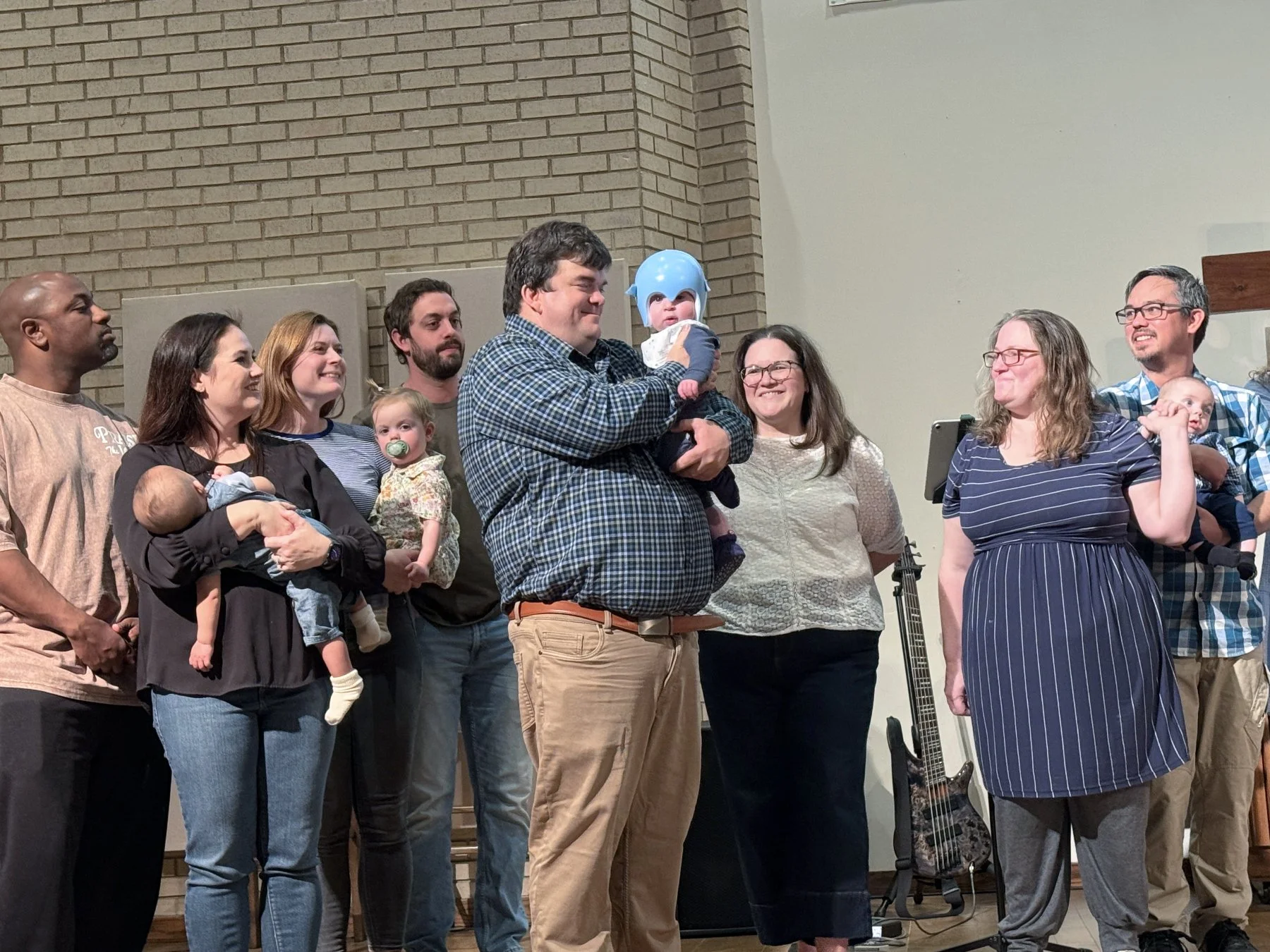
Jen Oshman is an author and teacher in a like-minded church in Colorado. This is child dedication Sunday, and she shared in a recent video what she thinks has to be central to our parenting. We have to “understand the worth and the value of the image of God in every single human being.” We have to teach kids their identity - who God made them to be, what can never be taken away. So they know their worth and value. And then, when they see acts of injustice, they can speak up, speak out. They know what a human being is worth. This is a critical responsibility of our parenting.
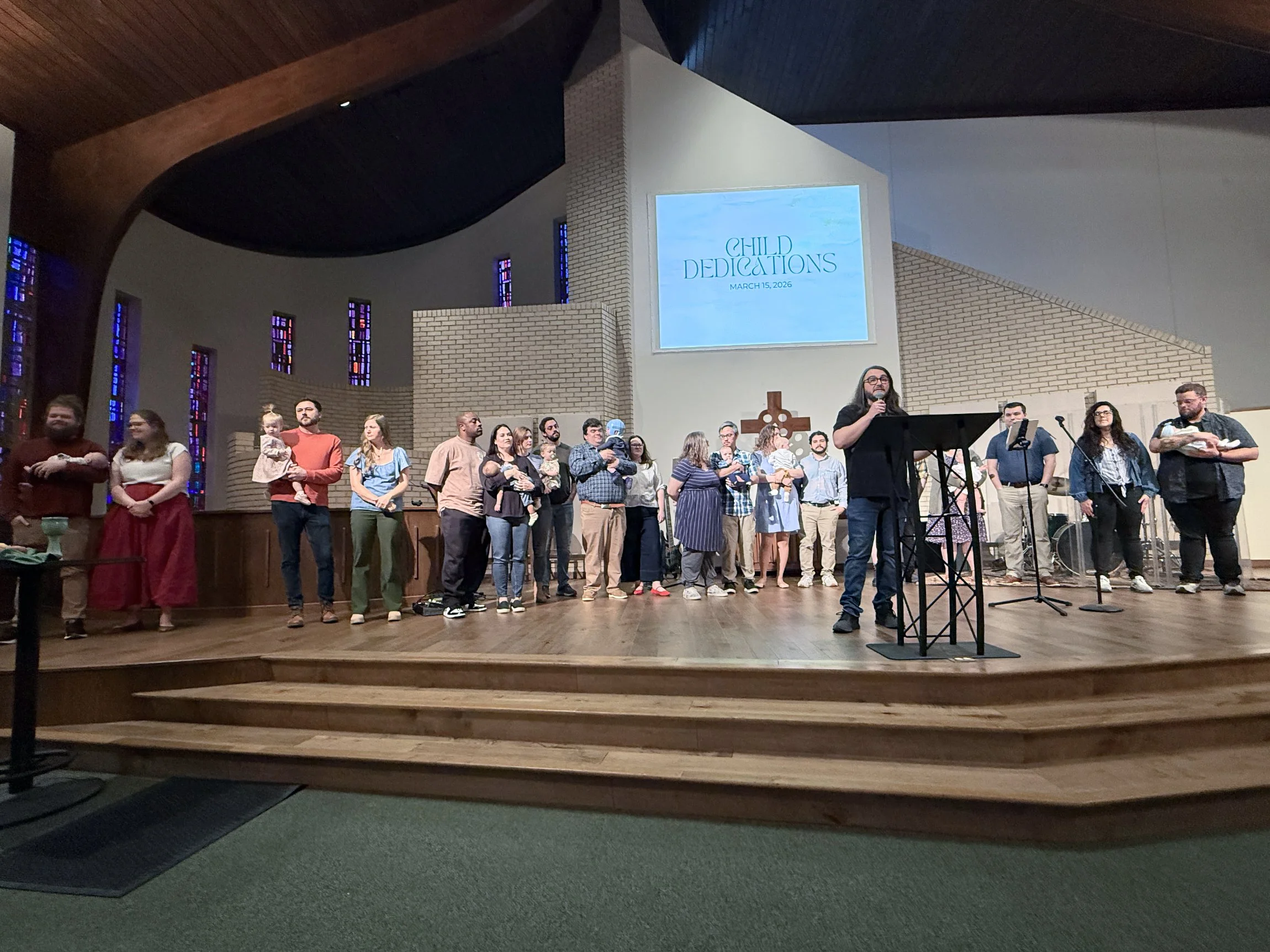
Karis, this is how we love. This is how we carry ourselves. We respect. We remind. There’s a Father in heaven. And His kingdom is coming.
Maybe you’re here. You think this is nuts. That God is real. And that He made humans. But, if you dismiss all that, what’s your motivation for treating others well? How do you truly ground those actions? You really have to live with the Pinocchio problem. What’s that? Know about that story of a puppet made of wood who desperately wants to be a boy? To get through this world and not drive yourself crazy, you may be made of wood - chemicals, atoms - but you have to act like you’re a real boy. To survive.
Let’s third turn to how we labor. How we serve others. We reign and we recognize. We reign over His creation under God’s authority. Remember, we’ve been given that purpose here in this passage. To “be fruitful and multiply and fill the earth and subdue it.” To exercise “dominion” over all that God has made. Now I think we’re doing alright at the being fruitful part. And we’ll talk about that later. ‘Twas supposed to be Darren last week. But I want to talk a few minutes about the dominion part.
This isn’t Christian nationalism - where we try to make this country only for Christians. And try to bring about the worship of Jesus by force. No, this dominion, this rule, is seen as we take all that God has made. And we build. We create. We make parks. We build cities. We wield our gifts. We use our passions. We work for His glory. We do it in His grace. And we show the ways of His kingdom. We serve as servant-kings on this earth. And we seek to expand that kingdom - here and abroad - as we go and make disciples. As we hold forth the gospel, and people embrace it by faith.
And, as we do, we recognize how much we need each other. Again, here in this passage, we see both men and women, made in His likeness, created in His image. We’re meant to complement each other. Equal in dignity and worth. Though different in role and function. Fitting together figuratively - and kinda literally - as puzzle pieces. Together, we image our Triune God. Together, we fulfill our purpose.
And this also can be applied more broadly than that. Jemar Tisby also explains this well. We don’t just bear God’s image individually but corporately, as well. He writes,
“In our Western culture, which tends to prize individuality, we can miss an important application of the image of God doctrine. Human beings do not simply bear God's image individually but collectively as well. Each people group with their various languages, dress, foods, clothing, and customs reveals a finite facet of God's infinite diversity. The kingdom of God is described as a banquet to which all, especially those on society's margins, are invited (Luke 14). Perhaps this banquet will be a potluck. Ethiopians will bring injera, Nigerians jollot, Jamaicans goat curry, and Koreans kimchee. Like a communal banquet that highlights the best aspects of different cultures, the heavenly congregation will put on display the magnificent diversity of God's people. No single people group can adequately reflect the glory of God. Rather, we need the diversity present in the multiplicity of nations and tribes to paint a more complete portrait of God's splendor.” (Jemar Tisby)
Do you want to be at that banquet? I might let you have my kimchee. But we truly need each other. We’re blessed by one another. And together, male and female - Korean and Ukrainian and Argentinian and Iranian - we image the glory of our God. This is how we labor - we reign, we recognize. As we serve others.
Christ, the Image of God
But tragically, we fail in all these things - how we live, and love, and labor. But thanks be to God, Christ came to redeem. Christ who 2 Corinthians 4:4 calls the very “image of God.” Or as Colossians 1:15 puts it, “the image of the invisible God.” Or, in Hebrews 1:3, “the radiance of the glory of God and the exact imprint of his nature.” Jesus looked at His friend Philip and said, in John 14, “Whoever has seen me has seen the Father.” Christ is the perfect image of our God. Yes, He’s fully God. But also what humans were meant to be.
And the good news is, through His life, death, and resurrection, and by His Spirit, we who believe, says 2 Corinthians 3:18, “are being transformed into the same image” - our glorious Lord - “from one degree of glory to another.” As Romans 8:29 says, we’ve been “predestined to be conformed to the image of his Son.” Or as Colossians 3:10 says, we’re putting off Adam and putting on Christ, “being renewed in knowledge after the image of its Creator.”
One day, as 1 John 3:2 puts it, “when he appears we shall be like him, because we shall see him as he is.” Or as Paul sums up Scripture in 1 Corinthians 15:49, “Just as we have borne the image of the man of dust, we shall also bear the image of the man of heaven.”
In creation, we’re made in His image. All humans, even if we’re not yet Christians. In redemption, we’re restored to that again. This is who we are, Christian. And it transforms how we’re meant to live. This comes by His blessing. We don’t deserve it at all. And one day, we’ll be made like Him.
I can easily get angry as I see everything going on today. And this is as I struggle to live all this out myself. But what if we didn’t choose the way of outrage, but rather to be the change we so much want to see?
What if people saw our smiles and craved our hugs and relied for our encouraging words? If they trusted our word and desired our wisdom and admired our joy? They saw a confidence. But a humility, as well. What if they saw Jesus in how we lived?
What if we loved our enemies? People we struggle to understand. Drew near to the helpless. Lifted up the downcast. Children, the elderly, the disabled, the unhoused. The sick. The poor. Those imprisoned. And hungry. People lost or scared. Those looking for refuge. Seeking a better way of life. Those who sin in ways that are so hard for us to grasp. Those who can’t understand - or stand - really any of our beliefs. What if we showed Jesus in how we loved?
What if we were know as servants in our city? We always gave it our best. And owned up to our mistakes. We tried hard to learn our skill. And were the first to offer a hand. And we weren’t the people who gossiped in the break room. And what if we didn’t just make places for others at the table? We insisted that they also got to speak. What if we were known for our welcome? The best possible citizens? The kindest, most helpful neighbors? What if we showed Jesus in how we labored?
Karis, if we want to know what God is like, we look at Jesus. If people are to know what Jesus is like, they look at us. Created in His image. Restored to His image. As we live, as we love, as we labor. Let’s ask the Lord to work that in us.
Recognizing and Reawakening Masterpieces
Perhaps my favorite book I read in 2025 was the novel Theo of Golden by Allen Levi. This mysterious man shows up in a Georgia college town. And begins visiting this coffee shop with portraits hung all over its walls. Painted by a gifted artist. Of unsuspecting citizens. And Theo decides to, one-by-one, buy each portrait. And find the subject of the picture. And give it to them as a gift. All so that he can tell them, maybe remind them, or awaken them to the fact - that they are a masterpiece, a true work of art. Worthy of such a portrait. Kings and queens, all. Imagine if we were like that, walking around our city. Volunteering in our schools. Taking notes in our classes. Sitting in meetings at work. Just imagine.
Through creation. By redemption. You are nobility. You are royalty. That is your identity. And you have this great purpose. To go and reign over what He has made, while you recognize your need for others around you.
You don’t have to create an identity. Build up your image. Market your likeness. You don’t have to go searching for a purpose. You’ve been given one by the God of the universe. Through His son Jesus Christ.
Why could we say America’s in such a mess? Maybe this reality hasn’t sunk into our souls. We then behave badly, and claim God’s on our side. But, as Jared Wilson has put it so well, “We keep trying to make Jesus in our image because it's scary to think of him making us in his.” But hear me: He’s a loving artist. He’s a gentle potter.
Karis, how about we live and love and labor - with this truth in mind - we are made in His image, in His likeness - broken as we may be. And so are those around us. Let us carry ourselves. And care for others. Really serve our world. Imaging our God. Looking like Jesus. By His grace and for His glory. And be the change we so much want to see. Let’s pray.